
How Does Direct Mail Marketing Work?
Direct mail marketing is a form of marketing that delivers a physical message directly to a targeted audience through the mail. Businesses use direct mail to promote products and services, generate leads, drive sales, announce events, reach new customers, and stay connected with existing customers.
Unlike mass advertising, direct mail can be targeted to specific geographic areas, households, demographics, and other audience characteristics. A campaign can also combine creative design, personalized messaging, printing, mailing, and audience targeting into one coordinated marketing effort. For businesses looking to reach a specific audience, direct mail can be an effective way to put a tangible piece of marketing directly into a customer's hands.

How Does Direct Mail Marketing Work?
A direct mail campaign typically involves several steps, from defining the audience and creating the mail piece to printing, addressing, postage, and delivery.
1. Define Your Target Audience
The first step is determining who you want to reach.
Your audience might be based on:
Geographic location
ZIP codes
Neighborhoods
Demographics
Household characteristics
Income ranges
Age ranges
Homeownership
Business type
Other available audience criteria
You don't necessarily need to have an existing mailing list to run a direct mail campaign. A direct mail provider can help identify and build a targeted list based on the characteristics that matter most to your campaign. At Omega, our team can drill down into your desired market and help develop a mailing list based on factors such as location, demographics, household characteristics, and other audience criteria. This allows your campaign to reach a more relevant audience rather than simply mailing to a broad geographic area.
2. Choose the Right Direct Mail Format
Once you know who you want to reach, the next step is choosing the type of mail piece.
Common direct mail formats include:
Postcards
Self-mailers
Letters
Brochures
Catalogs
Booklets
Dimensional mailers
Promotional pieces
The best format depends on your message, audience, budget, mailing goals, and how much information you need to communicate. For example, a postcard can deliver a quick promotional message, while a letter or booklet provides more space for detailed information.
3. Develop the Design and Message
Your direct mail piece needs to capture attention quickly and communicate a clear reason for the recipient to take action.
Effective direct mail typically includes:
A strong headline
Clear branding
A concise message
Compelling imagery
A clear call to action
Contact information
Website or landing page information
An offer or incentive when appropriate
The design should also account for how the mail piece will be physically viewed. Important information needs to be easy to find, and the call to action should be immediately recognizable.
4. Personalize the Mail Piece
One advantage of direct mail is the ability to personalize individual pieces. Variable data printing (VDP) allows different information to be printed on each mail piece while producing the entire campaign as one coordinated job.
For example, a campaign could include:
Recipient names
Personalized offers
Different images
Location-specific messaging
Personalized URLs
Unique promotional codes
Customized calls to action
This can make a direct mail campaign feel more relevant to the recipient. Omega uses variable data printing technology to produce personalized direct mail campaigns at scale. For more information, see our guide to What Is Variable Data Printing?
5. Print the Campaign
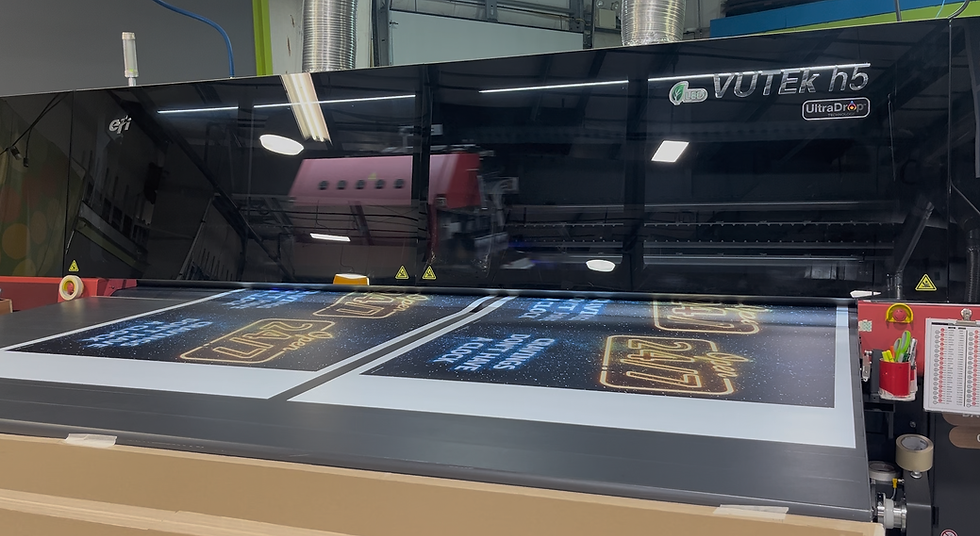
After the artwork, audience, format, and personalization requirements are finalized, the campaign moves into production. The printing process depends on the format, quantity, materials, personalization requirements, and finishing. Digital printing can be particularly useful for direct mail campaigns that require variable data or personalized content because information can change from one piece to the next.
6. Prepare the Mail for USPS
Once the pieces are printed and finished, they need to be prepared for mailing.
This can include:
Addressing
Sorting
Bundling
Traying
Presorting
Applying indicia or postage
Meeting USPS mailing requirements
The specific preparation depends on the type of mail and the mailing service being used.
What About Postage?
Postage is separate from the printing portion of a direct mail estimate and is determined by the United States Postal Service (USPS) based on factors such as the mail piece's size, weight, shape, quantity, and mailing requirements.
Because these factors can affect the final postage amount, postage will not be able to be finalized as part of the initial printing estimate.
At Omega, we can help determine the appropriate mailing specifications and prepare the campaign for USPS processing.
7. Mail the Campaign
After the campaign has been printed and prepared, the mail pieces are entered into the postal system for delivery to the targeted audience. Timing can vary based on the mailing class, preparation, destination, USPS processing, and other factors. It's important to build sufficient time into your campaign schedule for design, proofing, printing, mailing preparation, postage, and delivery.
8. Track the Results
A direct mail campaign shouldn't end when the pieces arrive in mailboxes. Tracking the response helps determine whether the campaign achieved its goals.
Depending on the campaign, businesses can use:
QR codes
Unique landing pages
Personalized URLs
Promo codes
Coupon codes
Dedicated phone numbers
Online forms
Lead tracking
Sales attribution
For example, instead of sending every recipient to the same website homepage, a business could use a dedicated landing page created specifically for the campaign. This makes it easier to measure how many people responded to the mailing.
How Does Direct Mail Compare to Other Marketing Channels?
Direct mail is often most effective when it works with other marketing channels rather than completely on its own.
A business might send a postcard promoting a special offer and then support the campaign with:
Email marketing
Social media advertising
Google Ads
Retargeting
Search marketing
A dedicated landing page
This creates multiple opportunities for someone to encounter the same campaign.
For example: Direct Mail → Website Visit → Retargeting Ad → Conversion
The physical mail piece creates the initial touchpoint, while digital marketing helps reinforce the message.
How Targeted Can Direct Mail Be?
Direct mail can be highly targeted. Depending on the available data and campaign requirements, businesses may be able to target audiences based on geographic and demographic characteristics.
For example, a local business could target:
Homeowners within a specific geographic area who meet selected demographic criteria.
A business-to-business campaign could instead focus on:
Businesses within selected ZIP codes, industries, company sizes, or geographic markets.
The more clearly you define your ideal customer, the more strategically you can build your mailing audience.
Does Direct Mail Still Work?
Yes. Direct mail remains a useful marketing channel because it provides something digital marketing cannot: a physical piece that arrives directly in the recipient's hands.
Direct mail can be particularly useful when businesses need to:
Reach a local market
Promote an event
Generate leads
Introduce a new business
Promote a special offer
Reach households in a specific area
Support a larger marketing campaign
Reconnect with previous customers
The effectiveness of a campaign depends on factors such as audience targeting, offer, creative, timing, format, frequency, and measurement.
How Much Does Direct Mail Marketing Cost?
There isn't one standard cost for a direct mail campaign.
The total cost can depend on:
Mailing quantity
Mail piece size
Paper or substrate
Printing
Personalization
Finishing
List acquisition or development
Addressing
Mailing preparation
Postage
Delivery requirements
Because postage is determined by USPS based on the characteristics and requirements of the mailing, it should be considered separately from the printing cost. The best way to estimate a campaign is to define the audience, quantity, format, design, personalization, and mailing requirements first.
How Long Does a Direct Mail Campaign Take?
The timeline depends on the complexity of the campaign.
A typical campaign may involve:
Audience and mailing list development
Creative development
Artwork approval
Data preparation
Printing
Personalization
Finishing
Mailing preparation
USPS entry and delivery
Larger campaigns or projects involving extensive personalization, custom finishing, or complex data may require additional production time. If your mailing has a specific in-home date or event deadline, communicate that requirement at the beginning of the project.
What Makes a Direct Mail Campaign Successful?
Successful direct mail campaigns typically start with the right audience and a clear objective.
Before producing your mail piece, ask:
Who are we trying to reach?
What action do we want them to take?
Why should they respond?
What offer or message will get their attention?
How will we track responses?
How will direct mail work with our other marketing channels?
A beautifully designed postcard won't produce the desired results if it reaches the wrong audience.
Likewise, a highly targeted mailing may underperform if the message doesn't give recipients a compelling reason to act. Audience + Message + Design + Offer + Timing + Measurement all play a role.
Can a Direct Mail Company Help Build My Mailing List?
Yes. A direct mail provider can help businesses develop a targeted mailing list based on criteria such as geographic location, demographics, household characteristics, and other audience attributes. At Omega, our team can help drill down into your desired audience and identify the locations and characteristics that align with your campaign goals. That means you don't necessarily need to start with an existing list.
How Does Omega Help With Direct Mail Marketing?
Omega High-Impact Print Solutions can help businesses bring multiple parts of a direct mail campaign together, from audience targeting and list development to creative, printing, personalization, mailing preparation, and fulfillment.
Our team can help determine the appropriate format and production approach based on your goals, audience, quantity, and timeline. Whether you're mailing to a highly targeted local audience or coordinating a larger campaign, having the printing and mailing components managed through one provider can simplify the process.
Direct Mail Marketing FAQs
What is direct mail marketing?
Direct mail marketing is a strategy that uses physical mail pieces to communicate directly with a targeted audience. Common formats include postcards, letters, brochures, catalogs, self-mailers, and promotional mailers.
How does direct mail marketing work?
Direct mail marketing typically involves identifying a target audience, building or obtaining a mailing list, selecting a mail format, designing the piece, printing it, preparing it for USPS, mailing it, and tracking responses.
Can direct mail be targeted to specific neighborhoods?
Yes. Direct mail campaigns can be targeted geographically using criteria such as ZIP codes, neighborhoods, carrier routes, or other available geographic data.
Can direct mail be targeted by demographics?
Yes. Depending on the available data, direct mail lists can be developed using demographic and household characteristics in addition to geographic targeting.
Do I need my own mailing list?
No. A direct mail provider may be able to help develop a mailing list based on your desired geographic, demographic, and audience criteria.
Can direct mail be personalized?
Yes. Variable data printing allows individual mail pieces to include personalized information such as names, offers, images, URLs, or other data.
How do you measure direct mail results?
Direct mail can be measured using tools such as QR codes, dedicated landing pages, personalized URLs, promo codes, coupon codes, phone numbers, online forms, and lead or sales tracking.
Is postage included in a direct mail printing estimate?
Not necessarily. Postage is determined by USPS based on factors including the mail piece's size, weight, shape, quantity, and mailing requirements. These factors can affect the final postage cost.
Is direct mail effective for local businesses?
Yes. Direct mail can be particularly useful for local businesses because campaigns can be targeted to specific geographic areas and combined with other local marketing efforts.
Can direct mail and digital marketing work together?
Yes. Direct mail can be combined with email, social media, search advertising, retargeting, landing pages, and other digital channels to create a coordinated marketing campaign.
The Bottom Line
Direct mail marketing works by delivering a targeted physical message to a specific audience and guiding recipients toward a desired action. The process involves much more than simply printing postcards and putting them in the mail.
A successful campaign starts with the right audience, uses an appropriate format and message, incorporates personalization when beneficial, follows USPS mailing requirements, and includes a way to measure results.
For businesses that don't already have a mailing list or aren't sure how to structure a campaign, working with a print and direct mail provider can simplify the process from audience targeting through production and mailing.
Ready to plan a direct mail campaign? Omega can help you determine the right audience, format, printing approach, personalization, and mailing strategy for your goals.


Comments